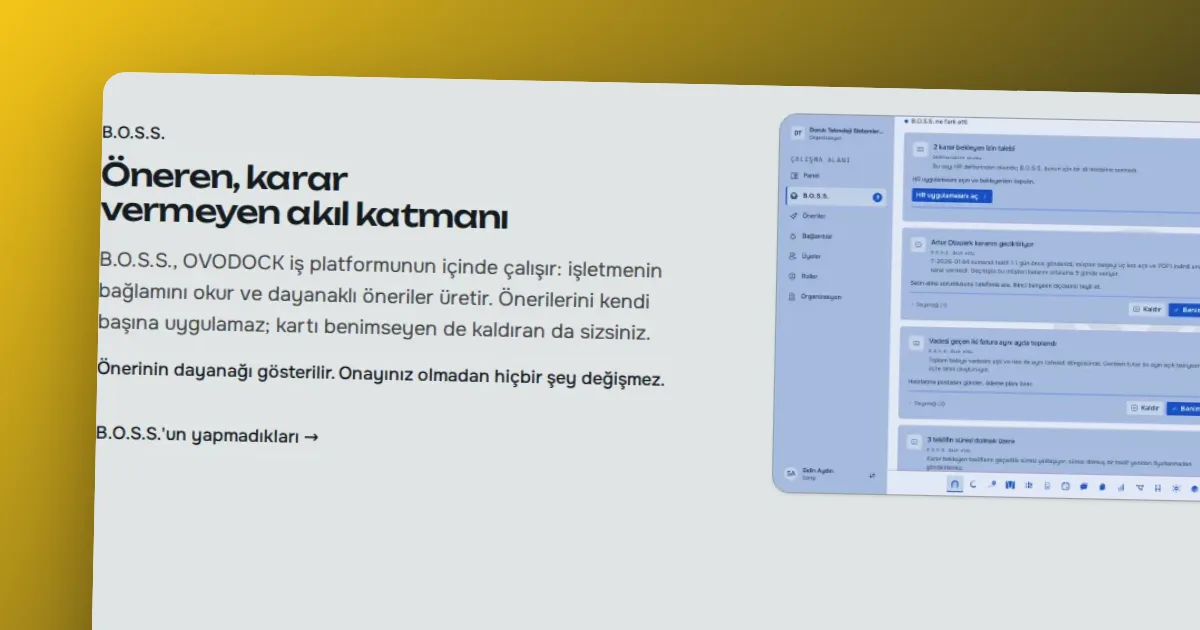
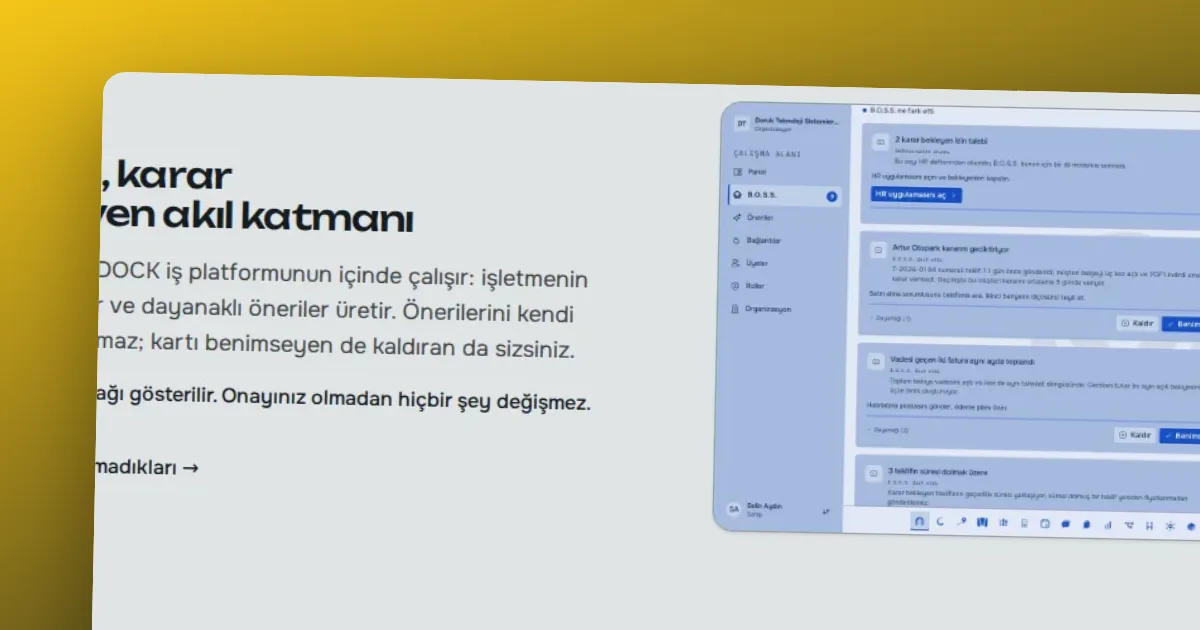
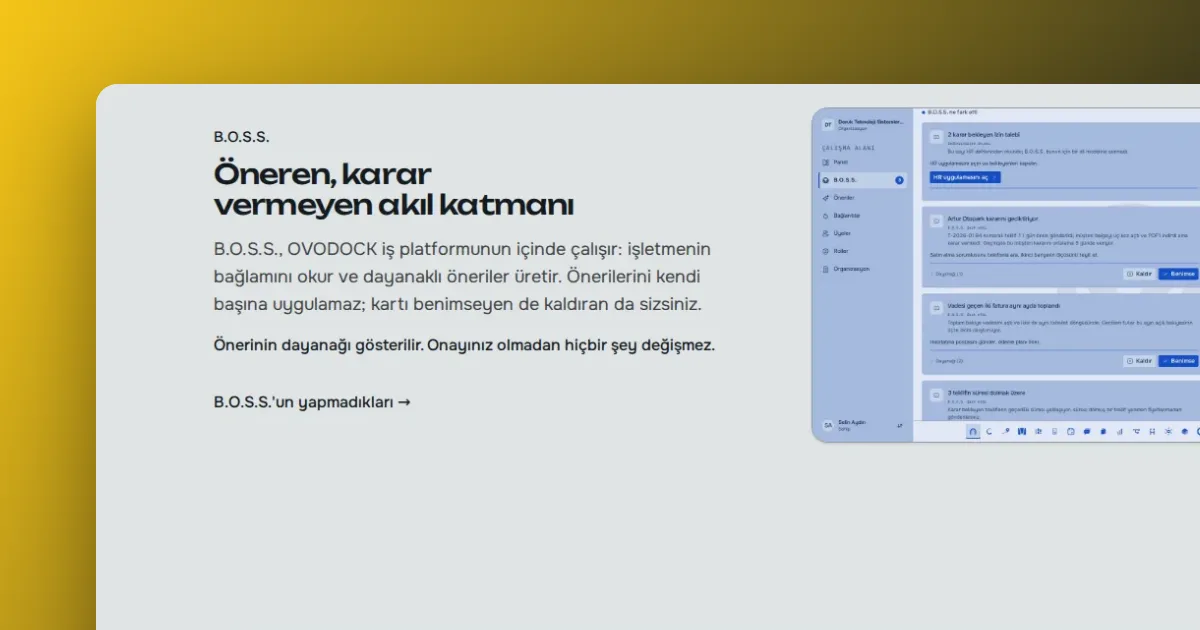
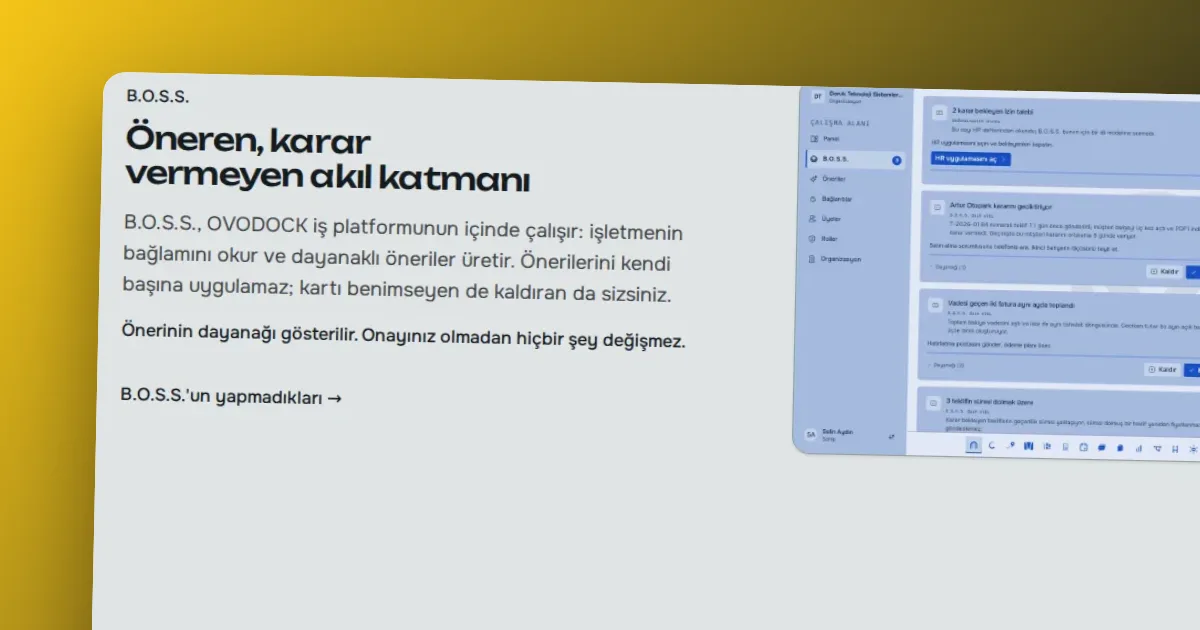
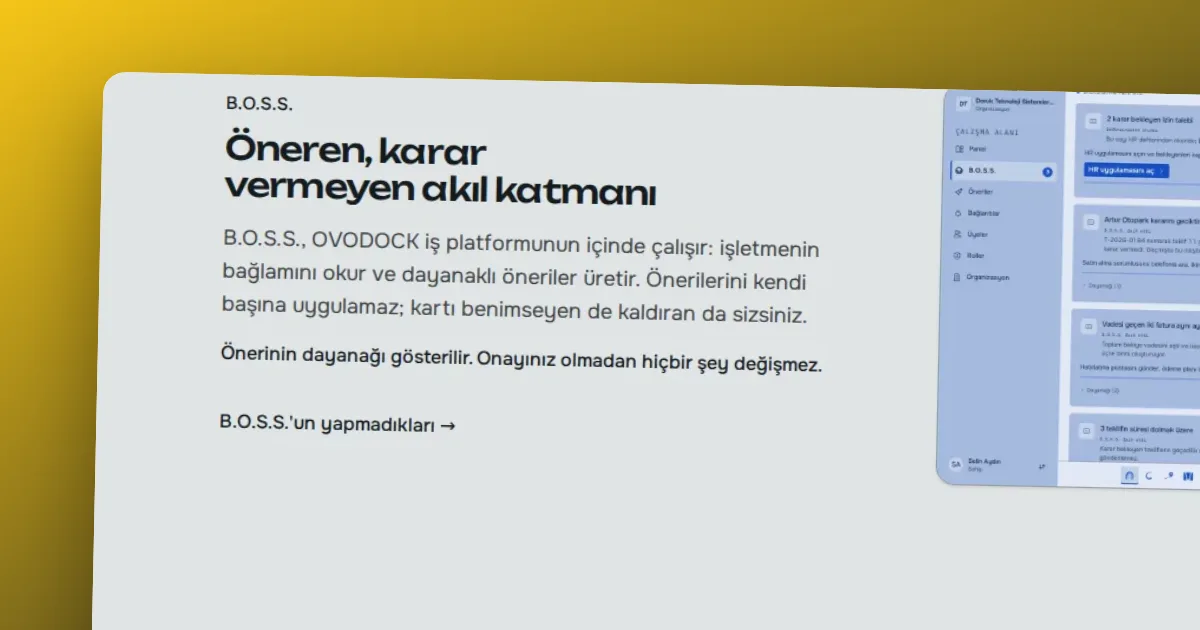
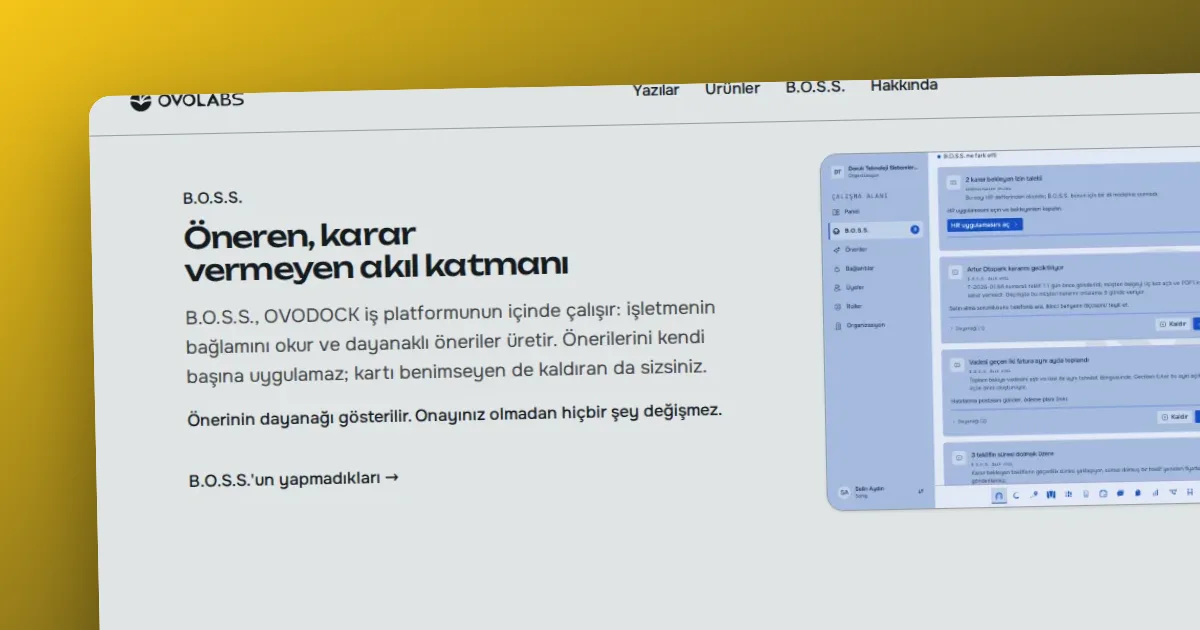
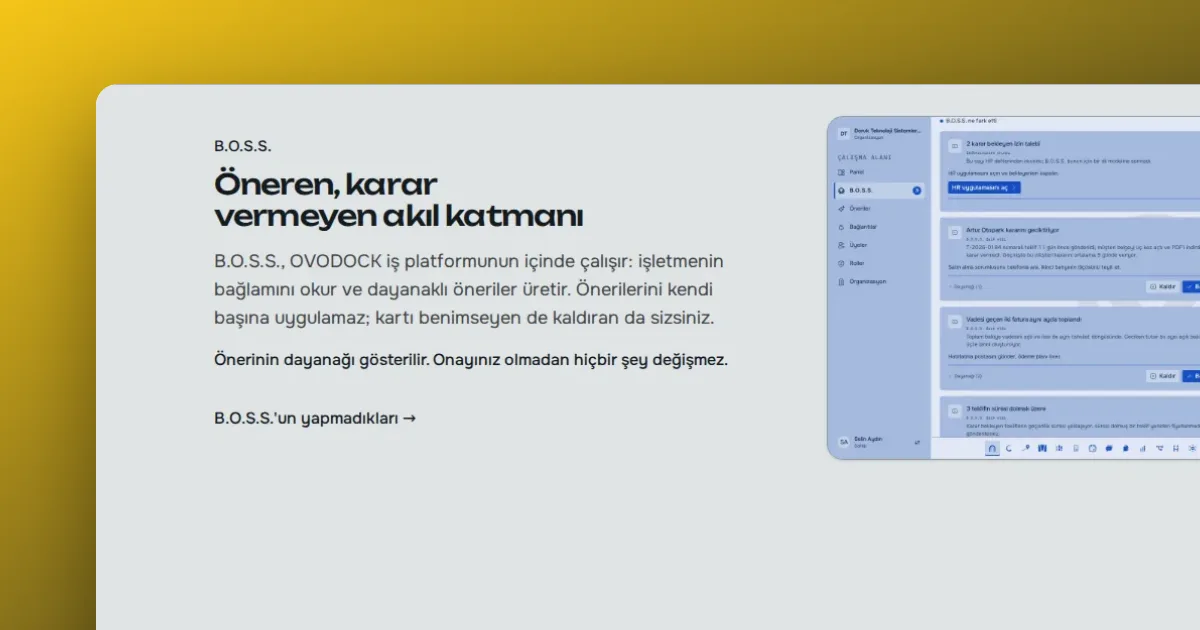
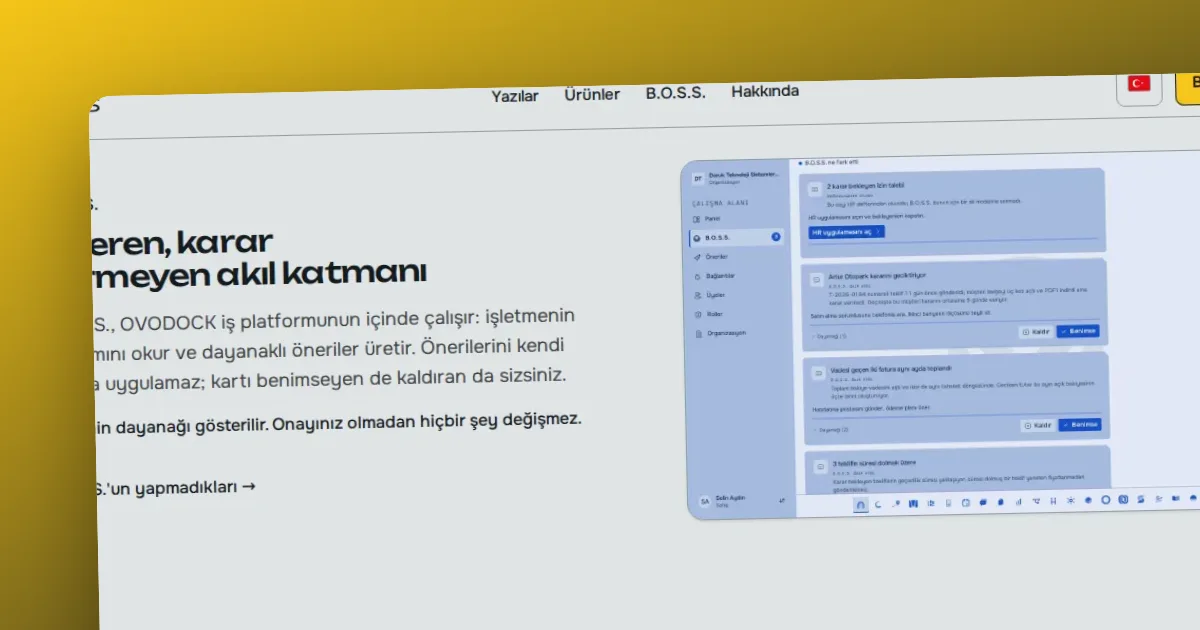
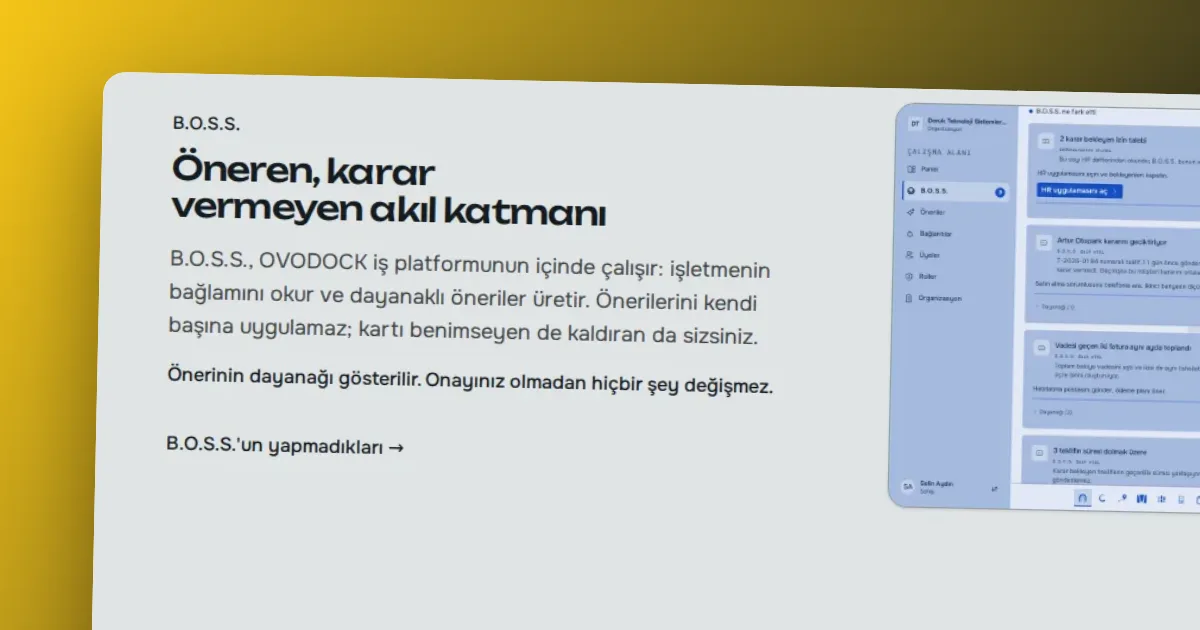
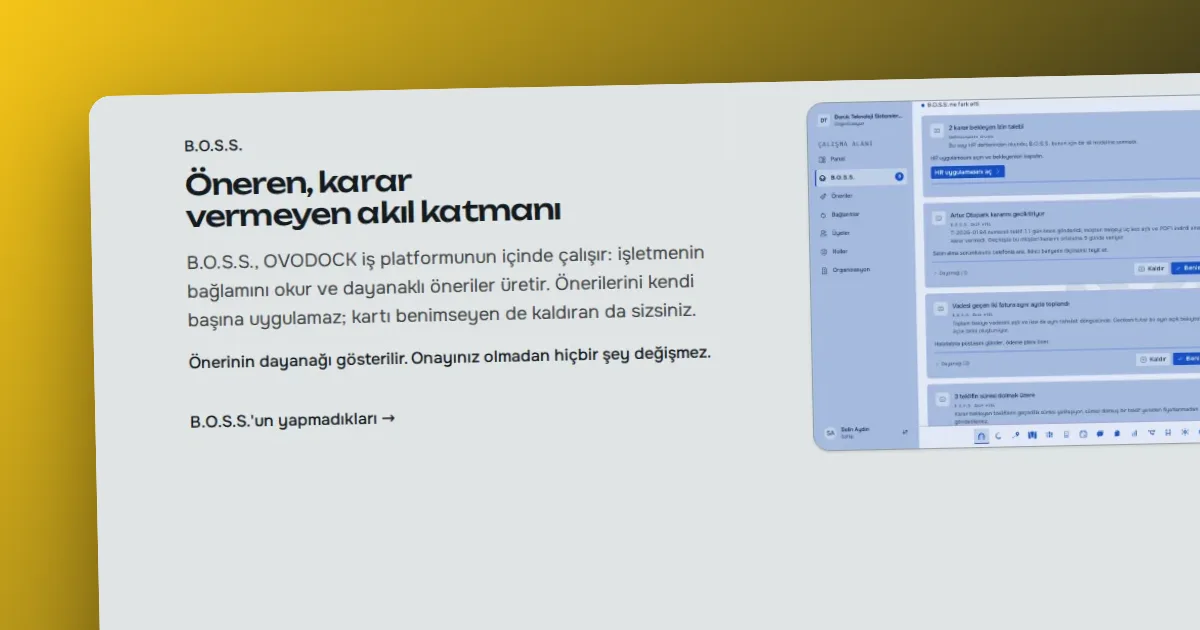
Explains which decisions a business can leave to AI and which must stay with a person, with a framework built on reversibility, cost and accountability, and the B.O.S.S. example.
Explains B.O.S.S.'s requirement that every suggestion state which record it rests on, how a single ungrounded suggestion invalidates the round, and why the rule matters for AI reliability.
A limits document explaining B.O.S.S.'s morning round, the check for new events, the daily round and token limits, and that it applies nothing on its own.
Recent documents, upcoming and pending work, contacts from the last six months and the facts in memory. Internal notes, costs, margins and file contents are not sent, nor are the records of an app you turned off on the Connections screen.
In the chat you pick a command rather than typing free text; the answer is not written to the database, and the last answer you can turn into work is kept only for your session. The facts in memory come from the morning run, not from the chat, and can be deleted one by one.
Every suggestion must name the record in the given context it rests on. A single suggestion without grounds, or resting on a record that was not in the context, voids the whole response of that run: nothing from it is saved.
Nothing the model writes is executed, and it never applies its own suggestions: you adopt or dismiss every card. The same goes for an app you don't use yet: adopt the card and it opens for three days free of charge. The only thing that runs without asking is the summary notification every morning.
A design note on the difference between continuing correspondence and a moment-bound meeting, why OVOLOOP and OVOROOM are separate products and how they can be used together.
Explains how MAILKODO's mail screen reads mail from the server on every request and draws it on screen, keeps no mail in its database, and what this design means for the user.
Explains why claims such as "this percent accurate" or "saves this much time" in AI products should be read with suspicion, what a good measurement looks like and why OVOLABS leaves some counters empty.
Explains the data-minimisation principle in AI features, the difference between the outline needed for a suggestion and the content that is not, using what B.O.S.S. sends and does not send as the example.
Explains OVODOCK's "Review quote" assistant reading a quote and writing the gaps in your language without changing the quote or storing the reply, and suggests ways to use AI review properly.
Review proposal" on the proposal form reads the proposal and writes what is missing in your language. It does not change the proposal and does not keep the answer.
One run every morning (10:00 Turkey time) and a check for new events every fifteen minutes. At most three model runs a day per organisation; if nobody looks at the suggestions for fourteen days, runs pause. The platform has a daily token ceiling; once it is reached, that day's runs are skipped.
Explains, through design reasons, why SITEKODO records returning to a version as a new publication that does not erase history, why it does not regenerate files and why it keeps only the last 5 versions.
Multi-tenant isolation in OVODOCK started out living in a single layer: Eloquent's global scope added a tenant filter to every query automatically. That was a single-layer defense — one line writing `…
Measurement cookies measure anonymously how pages are used. They are set only if you allow them; you can change your choice from the Cookie preferences link in the footer.
We use measurement cookies to improve the site. Essential cookies are always on. · Privacy policy